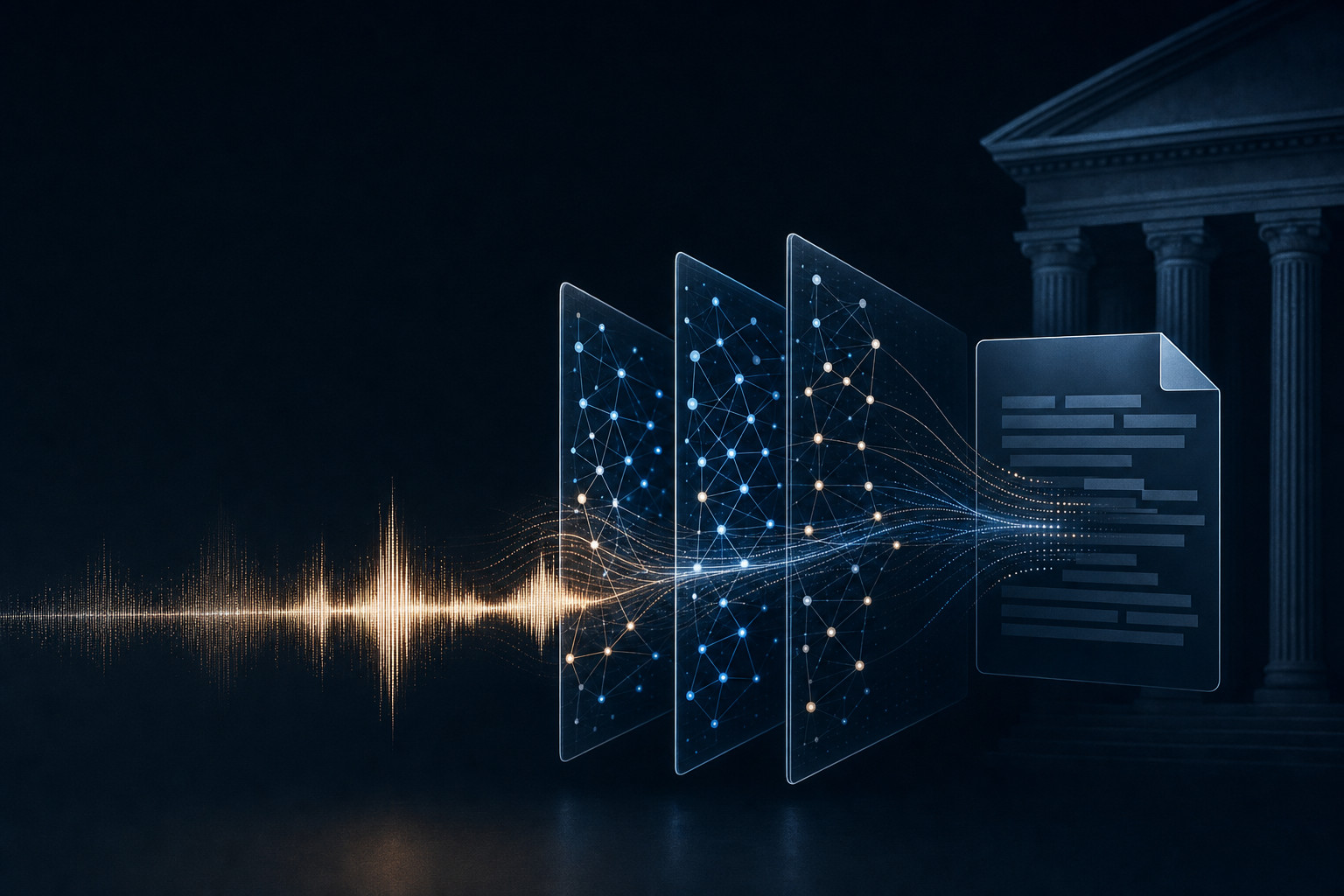
Google on August 26 introduced Gemini 3.5 Transcribe, a new speech-to-text model that does more than convert audio into text. In its smart-transcription mode, the Gemini Audio model is designed to remove filler words, smooth false starts, resolve spoken self-corrections and format the resulting text for reading. The product positions transcription as a form of AI-assisted drafting—potentially useful for dictation, messages and productivity workflows, but meaning users must distinguish edited output from a record of the original speech. (blog.google)
The model is now in public preview for developers through the Gemini API in Google AI Studio and Google Antigravity, Google said. It is also being used in the Gemini app for macOS in English and in Gboard’s Rambler feature on Android in selected countries and languages. Google said support for voice input in Chrome web fields is planned for a future release rather than available at launch. (blog.google)
Smart transcription versus a verbatim record
Gemini 3.5 Transcribe’s central feature is what Google calls smart transcription. Rather than retaining every hesitation or abandoned phrase, it can omit fillers such as “um” and “uh,” remove repetitions, and turn a correction made aloud into a single cleaned-up sentence. It can also apply punctuation and structured formatting, including normalized dates, numbers and currencies. That makes the output closer to edited dictation than conventional word-for-word transcription. (ai.google.dev)
Google’s documentation, however, makes the trade-off explicit: the model has a separate verbatim mode, which is the default for its transcription API. That mode is intended to return a word-for-word transcript and preserve fillers, repetitions, pauses and false starts. Smart mode is instead optimized for readability. The two modes give organizations a choice, but they also make mode selection consequential when the distinction between an accurate account of what was said and an edited rendering of its intended meaning matters. (ai.google.dev)
Languages, speakers and developer use cases
Beyond cleanup, Google says the model automatically detects more than 85 languages and can handle multilingual code-switching. It supports custom vocabulary to bias recognition toward domain-specific terminology, acronyms and proper names, as well as speaker diarization and word-level timestamps for recorded audio. Google’s announcement describes reliable speaker attribution for up to three speakers and characterizes attribution involving more speakers as experimental. (blog.google)
For developers, Google has split the offering between a real-time model for streaming speech recognition and a model for processing recorded audio. The company has positioned those options for uses including voice-driven applications, captions and post-call analysis. In the consumer-facing products cited by Google, the goal is more direct: Rambler is intended to turn spoken thoughts into formatted text, while the macOS Gemini app can use voice input as part of broader on-screen workflows. (blog.google)
Google also says Gemini 3.5 Transcribe improves on its prior Chirp 3 transcription model. The company cited Artificial Analysis measurements of 4.0% average word error rate for streaming use and 2.6% for non-streaming use, along with a 70% improvement in time to final transcription compared with Chirp 3. It also cited FLEURS benchmark results of 5.50% word error rate in streaming mode and 5.04% in non-streaming mode. Those are company-cited measurements, not independent tests supplied with the launch announcement. (blog.google)
Why the mode selection matters
The fidelity question is particularly relevant in professional settings where a transcript may be reviewed, relied upon or analyzed later. An edited transcript can be more useful than raw speech for a follow-up email, a draft prompt or an internal note. But the cleanup process can also erase signals that matter to a researcher, journalist, investigator, accessibility workflow or formal record: a pause, a repetition, an unfinished thought, or the fact that a speaker corrected themselves aloud. Google’s verbatim option provides a path for those cases, but it is not the same output as smart transcription. (ai.google.dev)
Recent research illustrates why transcription accuracy and post-processing should be treated separately, especially in higher-stakes domains. A March study in npj Digital Medicine found higher error rates for Whisper and WhisperX when transcribing clinical speech from non-native English speakers in its testing, while large-language-model post-processing reduced those accent-related errors. The study did not evaluate Google’s new model, but it reinforces a broader point: AI editing can improve readability or correct recognition mistakes while also adding another interpretive layer between speaker and document. (nature.com)
Gemini 3.5 Transcribe therefore represents a product shift as much as a model update. Speech-to-text tools are increasingly being asked not simply to capture language, but to prepare it for immediate action in software. For professionals and builders, the practical question will be whether a workflow needs a polished draft, a verbatim record, or both. Google’s new model supports each direction, but its value will depend on making that choice deliberately. (ai.google.dev)