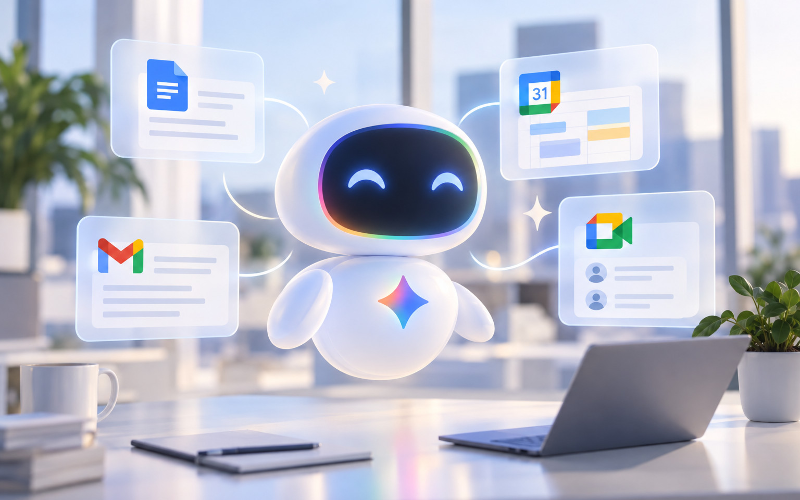
Google has announced a Gemini workplace agent designed to carry out assignments across business apps, but background delegation and other features remain in early access. AI-Generative
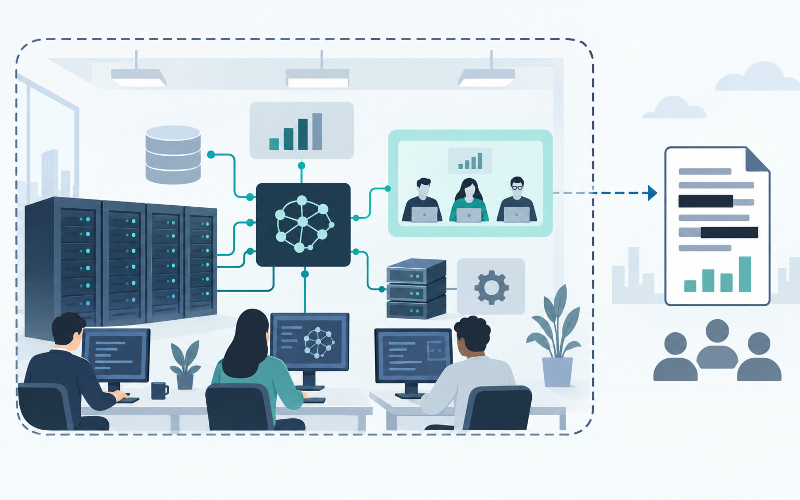
CIO reports that AI agents are running locally on employee workstations with expansive user permissions, extending workplace AI beyond content creation and embedded copilots. CIO
Recruiters are finding people faster with AI without a corresponding increase in candidate confidence, and recruiters surveyed by TestGorilla report substantial manual credential checking. HR Dive
South Korean game companies are replacing coding tests with AI skills assessments in entry-level hiring. finance.biggo.com
Workforce preparation remains uneven: The HR Director reports businesses adopting AI without preparing employees, while CIO Dive reports a persistent agentic AI gap between executives and workers. The HR DirectorCIO Dive
A study reported by Business Review finds improved work quality among Romanian employees using AI, but also heavier workloads for some users, leaving a mixed picture of employee benefits. Business Review
Scenario 1Analysis: Broader workplace delegation
Workplace agents could move beyond limited access into routine assignments across business apps, making permissions and approval controls more visible parts of workplace deployment.
Watch for- Google expands access to background delegation in its Gemini workplace agent.
- Employers publish permission limits and approval requirements for agents operating on employee workstations.
Scenario 2Analysis: Hiring shifts toward demonstrated skills
Faster candidate discovery without greater confidence could push employers toward practical skills assessments and more explicit credential verification, alongside greater attention to candidates’ ability to work with AI.
Watch for- Employers beyond South Korean game companies introduce AI skills assessments.
- Recruiter surveys show whether manual credential-checking workloads decline.
Scenario 3Analysis: Workforce readiness slows expansion
Employers could keep AI deployments limited while addressing training gaps and workload concerns, rather than treating improved task quality as sufficient evidence of better jobs.
Watch for- Employers retain pilots while introducing role-specific training and employee feedback processes.
- Worker surveys continue to report heavier workloads despite improvements in work quality.