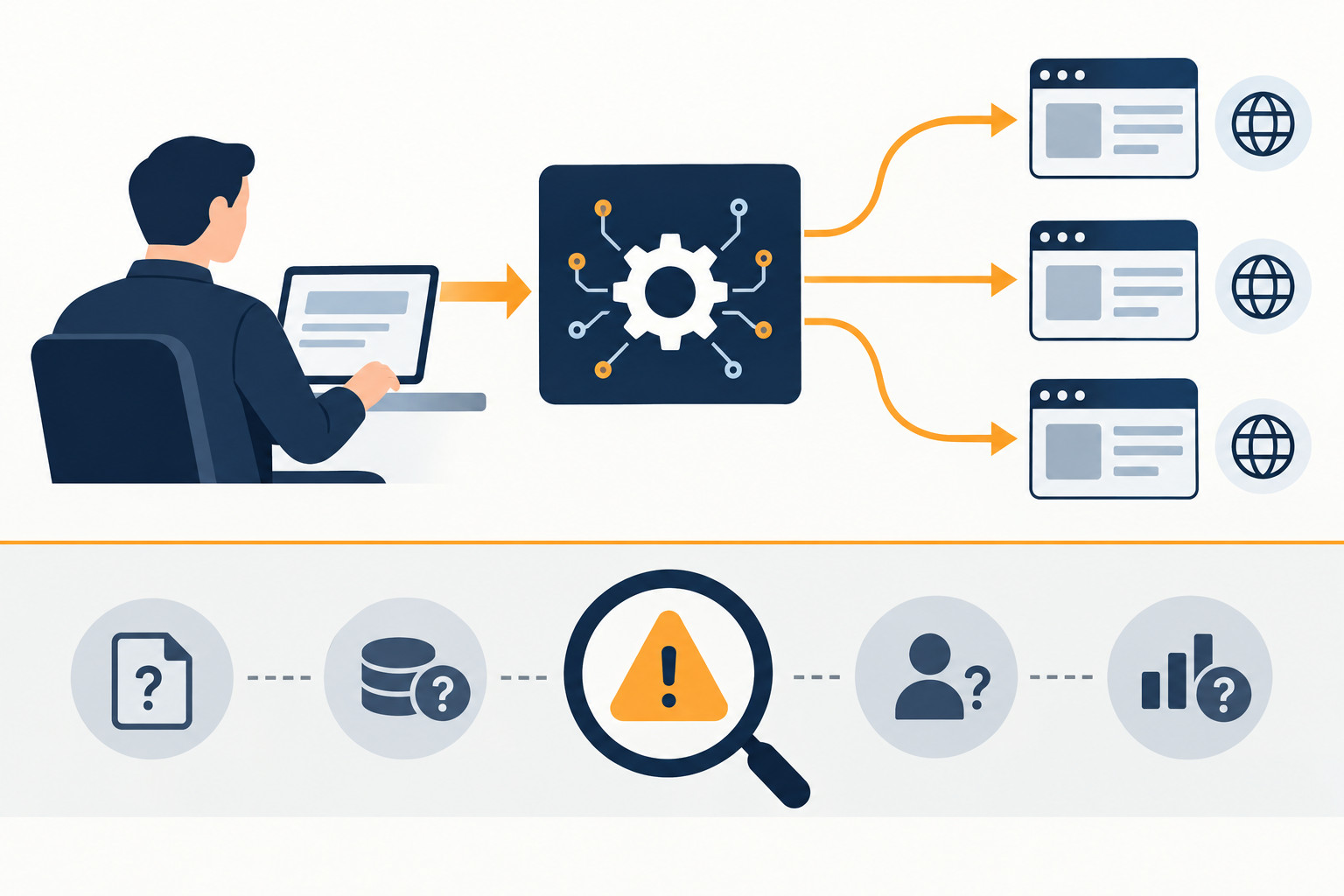
United Airlines said November 11, 2026, that it is taking steps to prevent unauthorized third-party personal AI agents from accessing its services to book travel. The restrictions target access through both the airline’s digital platforms and travel intermediaries, with United citing customer-data protection, unintended transactions and potential regulatory conflicts. (United Airlines)
The announcement draws a narrower boundary than a ban on all AI-assisted travel planning. United’s stated target is “unauthorized, third-party personal AI agents or assistants.” Its reference to travel agencies and aggregators describes indirect access channels covered by the restriction, not a blanket prohibition on those businesses. (United Airlines)
For developers building automated booking assistants, the distinction is consequential: a tool’s ability to find a flight or carry out a customer’s instructions does not establish that the airline accepts it as a purchasing intermediary. United’s statement makes access to the service itself part of the issue, beyond whether an assistant can successfully navigate a booking. (Skift)
What the announcement establishes
United says its work includes changes to booking, ticketing and distribution policies. The statement describes steps being taken, rather than confirming that every change has been completed. November 11 is the announcement date; the statement does not provide a separate effective date or explain a technical mechanism for identifying and blocking agents. (Paddle Your Own Kanoo)
The term “unauthorized” also leaves an important question unresolved. The announcement does not spell out how an assistant would obtain approval or identify exceptions for approved integrations. It therefore cannot, by itself, establish which particular third-party products might qualify for access or what arrangements would distinguish them from prohibited personal agents. (United Airlines)
USA TODAY reports that agents can still present United flight options and prices but cannot directly complete purchases on the airline’s website. That is a single-source description of the research-versus-purchase boundary, not a verified account of every permitted interaction. United’s full policy text could not be independently reviewed for this article, leaving authorization criteria, exceptions, implementation timing and the precise scope of permitted interactions unverified. (USA TODAY via AOL)
That limitation matters when comparing tools marketed as travel assistants. Displaying an itinerary and executing a transaction are different capabilities; the reported permission to show fares should not be read as permission to enter an account or finalize a booking. Nor does that report establish unrestricted automated access to United’s website for research. (USA TODAY via AOL)
Security concerns are not findings of harm
United warns that sharing account credentials with personal AI assistants can expose sensitive information. It also identifies unintended purchases, account changes and use of MileagePlus miles as possible consequences. These are the airline’s stated risks, rather than evidence in the announcement of a particular customer incident or a measured rate of agent errors. (United Airlines)
The concerns reach beyond buying the wrong ticket. Account access and loyalty balances are also part of the airline’s explanation, making purchase authorization only one component of its position. United has framed the restrictions around protecting customers’ information and accounts, not solely around whether a traveler intended to buy a flight. (Paddle Your Own Kanoo)
A regulatory concern, not a regulatory ban
United also says automated actions could conflict with Federal Aviation Administration and Department of Transportation regulations. Its example concerns a human acknowledgment about prohibited baggage contents during check-in. That is the airline’s regulatory interpretation; the evidence reviewed does not establish a federal prohibition on AI flight bookings. (United Airlines)
USA TODAY said the two agencies did not immediately respond to its requests for comment. Their lack of a response is not confirmation of United’s interpretation. Without an independently verified official interpretation addressing agents, a concern about a check-in acknowledgment should not be expanded into a legal conclusion about every automated ticket purchase. (USA TODAY via AOL)
Other sectors are testing approved access
A recent business-payments initiative offers a useful contrast. On October 21, 2026, Visa announced a live pilot with BILL and Billtrust in which trusted AI agents initiate and complete approved invoice payments through supplier portals. Visa described the pilot as operating with participating customers and suppliers, rather than offering unrestricted access to any business portal. (Visa)
According to Visa, the pilot checks agent identity and authorization, applies business-defined controls and uses tokenized payment credentials instead of shared supplier-portal logins. It connects the buyer’s approval of an invoice with the supplier’s acceptance of payment. Those are reported design features, not independent proof that the system eliminates risk. (Visa)
The comparison illustrates an important distinction for enterprise buyers: permission from the customer and acceptance by the service provider are separate questions. A controlled payments pilot does not establish that a travel agent is authorized to transact with United. It does show a different approach to the same problem—allowing automated execution within an agreed relationship. (Visa)
United says it will continue evaluating how personal AI assistants interact with its services. For now, its announcement establishes a restriction on unauthorized access, while leaving the authorization process, exceptions and implementation details unresolved in the statement itself. (United Airlines)