Roland has released Melody Flip, a generative-AI music-production tool designed to help users develop song ideas inside a digital audio workstation rather than automatically produce a finished track. The company describes Melody Flip as a “music creation partner” for discovering, selecting, and developing melodic material, and says it is available through Roland Cloud Manager.
Built for musical building blocks
The distinction is central to the product’s positioning. Instead of generating a complete vocal-led arrangement from an open-ended text prompt, Melody Flip starts with musical building blocks: melodies, chords, bass, and drums. Roland’s release materials say users can select from more than 250 genre-spanning “Palettes,” each a connected set of those four parts, then audition and develop the resulting ideas. The output can be exported as audio or MIDI for further arrangement, editing, and sound design in DAWs.
That makes Melody Flip less a substitute for the production process than a tool intended to occupy its earliest stage: moving past an empty session, trying harmonic or melodic directions, and carrying the selected material into a conventional music-making workflow. Roland says the software was created with Sony Computer Science Laboratories, drawing on Sony CSL research in music-analysis technology. Roland announced Melody Flip in March 2026, and reporting cited in the source pack places its release on September 4, 2026.
Two ways to start
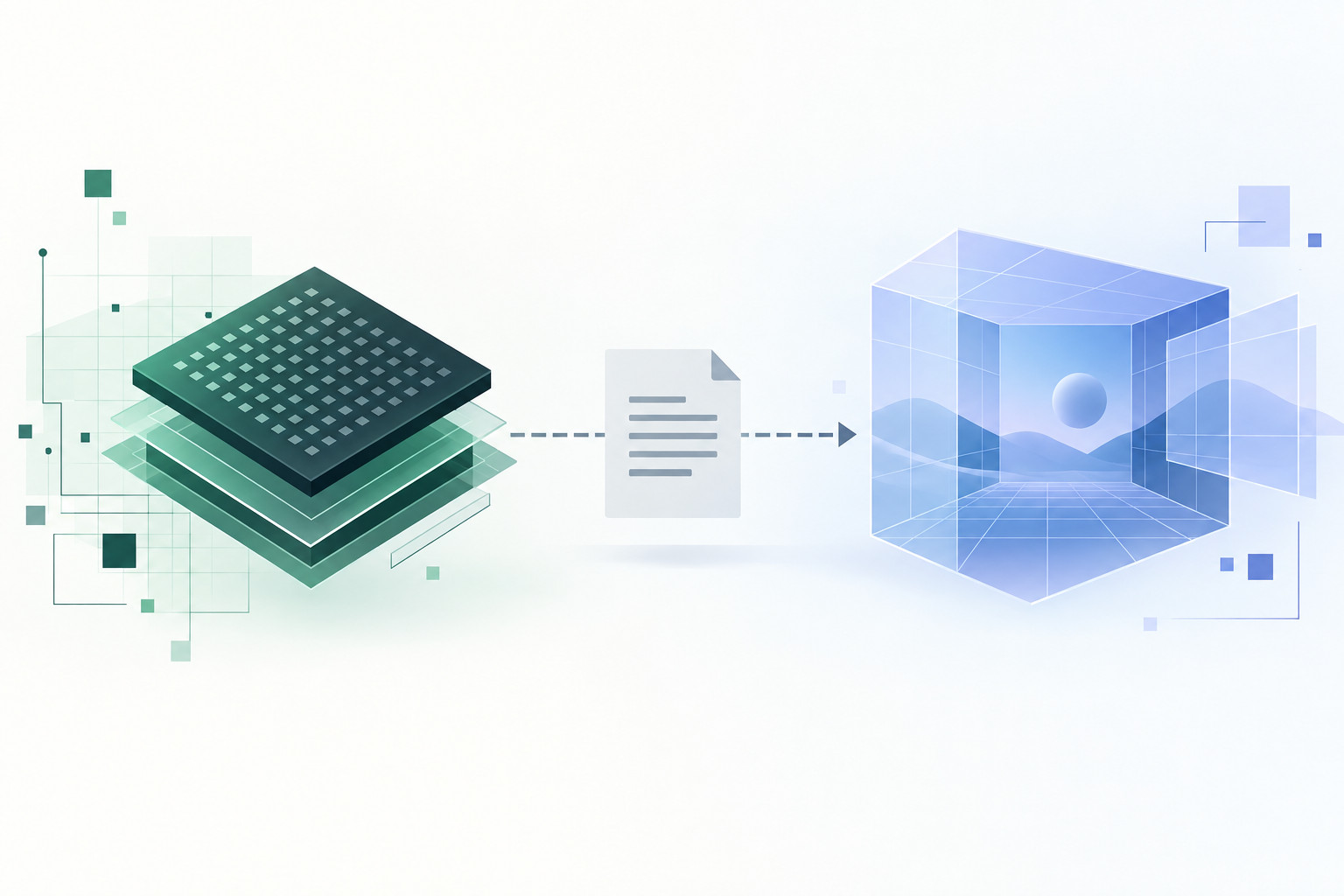
Melody Flip offers two broad starting points. A user can browse its Palette library directly and generate ideas from a selected style. Or they can import an audio file for analysis. Roland says that workflow examines characteristics including a song’s structure, tempo, key, chord progression, genre, and mood, then suggests related melodies and accompaniment patterns intended to reflect aspects of the track’s overall musical feel. Roland says the feature is designed to inspire original work rather than replicate existing music.
Rights and data questions remain
The company’s language is important but does not settle broader questions that surround generative music. The cited product and release materials do not describe the tool’s training-data sources, rights in generated outputs, commercial-use permissions, or how imported reference audio is retained or otherwise handled. That absence should not be read as a finding that Roland’s separate membership terms or privacy policy contain no relevant provisions; those materials are not cited or summarized here. Users evaluating Melody Flip for commercial projects should consult applicable Roland membership terms and privacy materials rather than infer legal or licensing assurances from the product’s creative positioning.
A practical workflow limitation
The workflow also has a practical limitation. Roland’s support documentation says Melody Flip does not support total recall and recommends exporting melodies a user wants to keep. That constraint reinforces the company’s framing of Melody Flip as an idea-generation and export tool, rather than a fully persistent composition environment embedded in a session.
How it differs from text-to-song tools
The contrast with services such as Suno and Udio is therefore about more than interface design. The Verge reported that Melody Flip uses controls including genre, note density, BPM, and musical key instead of open-ended text prompts, and characterized its results as simple loops intended as starting points. In this model, the producer remains responsible for choosing usable material and turning it into an arrangement, with MIDI export allowing the musical information to be reassigned to different instruments and edited in a DAW.
That distinction is becoming less absolute across the market. Suno introduced Suno Studio in September 2025 as a multitrack workspace that can generate vocals, drums, synths, and other stem variations, then export audio or MIDI to a DAW. Google DeepMind’s Music AI Sandbox, meanwhile, has presented artist-facing tools for generating musical parts, extending existing clips, and making targeted edits. Those developments show that AI music products increasingly overlap around iteration and editing, even as their starting assumptions differ: a full generated track, an editable stem-based session, or a set of compositional suggestions.
Roland’s place in the wider AI music debate
For Roland, the launch is notable because it brings generative AI into the product orbit of a company long associated with instruments, production hardware, and music software. But its arrival does not resolve the debates around consent, source material, artist compensation, and transparency that have followed AI music platforms. Warner Music Group’s 2025 agreement with Udio, for example, set out plans for a licensed service based on authorized music and participating artists and songwriters. Roland has framed Melody Flip as a tool that supports creativity rather than replaces the person making the music; the available launch material does not address the provenance of its AI training data.
Melody Flip’s more limited scope may nevertheless be its clearest statement. Rather than asking a system to deliver a song ready for listening, it asks the system for possibilities that can be accepted, rejected, edited, and arranged by a producer. Whether that approach becomes persuasive to musicians will depend on the usefulness of the ideas it produces and on answers to the rights and data questions still facing the broader category. For now, Roland is placing its generative-AI bet inside the familiar DAW workflow, where a musical sketch is only the beginning of the work.