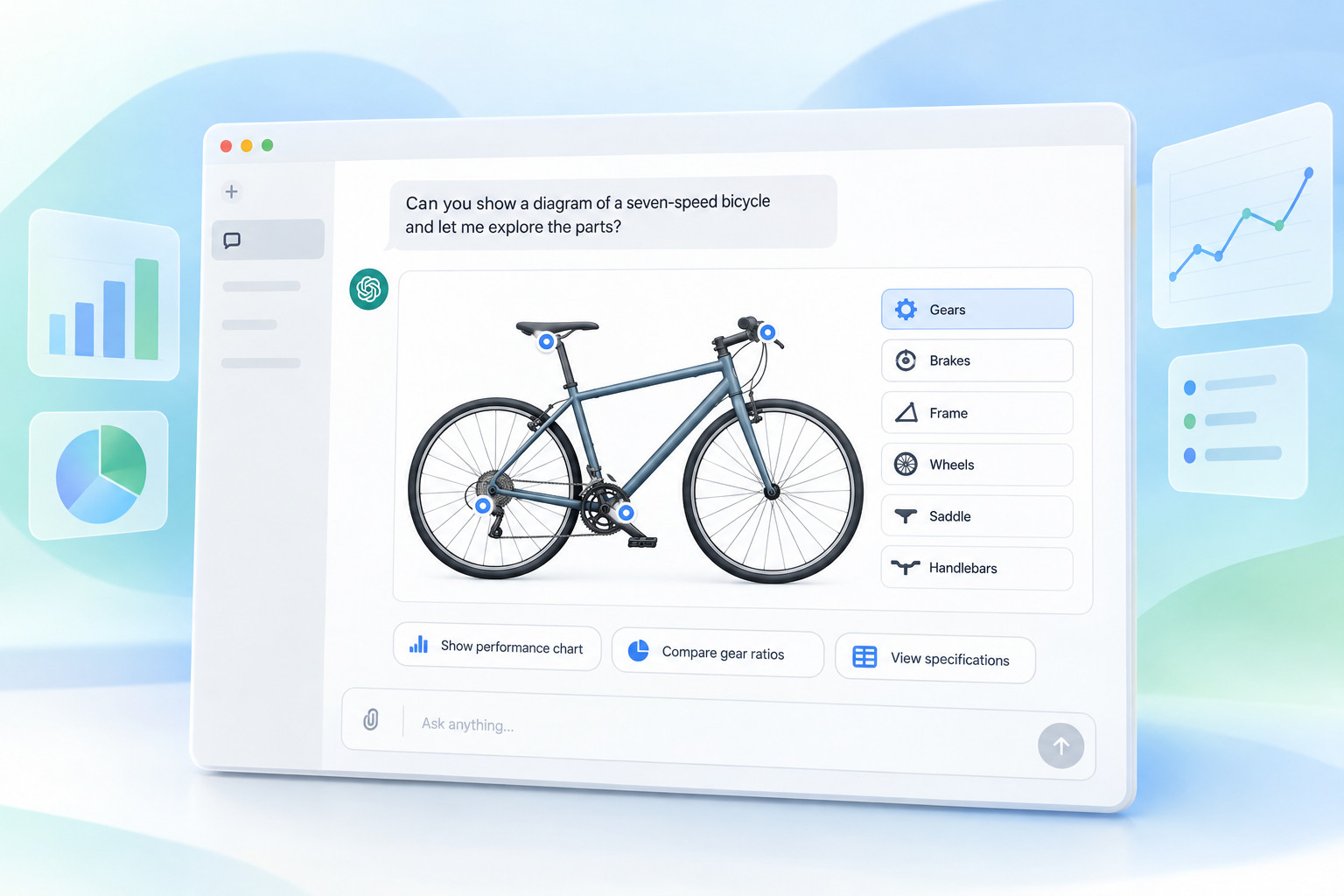
Bluesky expanded its experimental AI platform Attie on October 15, 2026, adding tools for creating small social websites rather than only custom feeds. Its official announcement names games, quizzes, guestbooks and question-and-answer pages, while reporting describes polls and dashboards that users can build with prompts and share as websites. The change extends Attie’s earlier feed-building functionality rather than marking its initial launch. (The Verge)
The announcement says site creation begins that day for Attie users. That is narrower than a promise of unrestricted public access: pricing, account eligibility, usage limits and geographic availability have not been established by the materials reviewed for this article. Those gaps matter for community managers considering whether to make an Attie-built experience part of a public campaign.
What users can build
The basic interaction is straightforward: describe an app in a prompt and have Attie generate it. The Verge reports that the resulting small apps can be shared as their own websites. Its examples span games, polls and dashboards, although those categories should not be read as evidence that every type of app has been tested successfully. (The Verge)
The Verge’s Jay Peters reported generating a simple poll asking people to choose between Pokémon Red and Pokémon Blue in a few minutes. That is a firsthand account from Peters, not testing conducted for this article. It establishes a narrow example of prompt-based creation, not a benchmark for the speed or dependability of more complicated projects. (The Verge)
There is also a difference between producing an interface and establishing that an app works reliably for a community. The reported poll does not establish how Attie handles sustained participation, unexpected inputs or later changes. No independent assessment of those behaviors is available in the approved reporting, so broader claims about production readiness would be premature.
How the apps connect to Bluesky
TechCrunch reports that Attie experiences use AT Protocol and connect creators to their protocol identities, with access to Bluesky’s audience. (TechCrunch) The potential benefit is therefore not simply faster app creation. A community tool could have an audience already assembled around its creator, rather than requiring the creator to find participants from scratch.
That is a distribution proposition, not evidence of adoption. A shareable poll, quiz or game may offer followers another way to interact, but the announcement does not establish how many people will use these experiences or return to them. For builders, the important distinction is between making something available to a social audience and demonstrating that the audience finds it useful.
A wider experiment in small AI-built tools
Attie’s expansion comes alongside other efforts to make small applications through ordinary-language instructions. In November 2025, Google expanded its no-code Opal experiment to more than 160 countries. Google described uses including research workflows, marketing-content generators and quiz apps—examples that reach beyond software teams into everyday professional and creative work. (Google)
Google subsequently brought Opal into the Gemini web app in December 2025 as a way to create experimental Gems. It also introduced a view that translated prompts into editable lists of steps. That approach illustrates another part of the challenge: helping people understand and revise what an AI-generated tool actually does, not merely generating its first version. (Google)
The comparison also carries a caution about product continuity. On September 30, 2026, Google announced that Opal would shut down in November as it shifted toward reusable skills in Gemini. Its announcement says the experimental Gems associated with Google Labs will not migrate into skills. This is a separate product decision, not evidence about Attie’s future. (Google)
For organizations evaluating experimental builders, that history highlights a practical consideration: an easily created tool still depends on the service supporting it. Creation speed, understandable behavior and continuity are distinct questions. Google’s move does not answer those questions for Bluesky, but it shows why a useful demonstration alone is not enough to establish a lasting community service. (Google)
Access details remain important
For Attie, the unresolved details include charges or credits, account requirements, possible waitlists, content restrictions and usage limits. The announcement’s start date should not be treated as confirmation that every prospective creator can immediately build without cost or constraints. Nor does the available reporting establish the complete sequence from entering a prompt to publishing and maintaining a shared site.
The immediate development is nonetheless clear: Attie is broadening from selecting social content to helping users create interactive experiences around it. For community managers and AI builders, the next useful evidence will be documented access terms and repeatable demonstrations of creation, sharing and operation—not a broader quality claim inferred from one quickly generated poll.